
November 3, 2025 | By Andrew Housman (MS '27)
Faculty, staff seek to support campus through dialogue
The Program on Intergroup Relations is currently hosting an eight-week Intro to Dialogic Pedagogy and Practice seminar for faculty and staff who are interested in incorporating dialogue strategies into their curricula and communities.
Previously called “Intergroup Dialogue Basics,” “Intro to Dialogic Pedagogy and Practice” aims to familiarize attendees with dialogue strategies that can be used to enhance their teaching methods and facilitate effective campus discussions.
Patrick Kazyak-Albaladejo Muñiz, associate director of strategic partnerships and dissemination, manages the program with lecturer danny alvarez. They explain that the fall seminar does not offer intergroup dialogue sessions like those that IGR will offer in the winter semester. Rather, the seminar explores the theories and practices behind dialogic approaches, providing faculty with a strong foundation to apply these concepts to their own dialogue facilitations.
Demystifying intergroup dialogue
“We're trying to help participants understand what we mean when we talk about ‘intergroup dialogue’ and what we mean when we talk about dialogue in general as a mode of communication,” Patrick says. “How dialogue differs from debate or discussion is a big topic.”
The seminar focuses on discovering shared meaning among participants, enabling them to explore their own social identities in relation to others, with the goal of empowering their classes, communities, and campus.
“ I think the beauty of the work that we do is helping folks recognize that we all hold multiple identities, and all of us have experiences with those identities as it relates to ourselves,” Patrick adds.
Building capacity for impact
Those taking the program are in leadership roles on campus and have experience in creating class curricula, coordinating programs, and developing projects. The seminar supplements their ongoing work in intergroup relations in order to help them consider their social identities in relation to others, including the students and cohorts they mentor.
“Participating in the Intro to Dialogic Pedagogy and Practice Seminar has been an amazing learning and relationship-building experience. The intentional time that we’ve spent getting to know each other and building trust has enabled us to have big, vulnerable conversations in a curious and empathetic way,” says Madeline DeMarco, health promotion specialist at Wolverine Wellness. “By participating in this seminar, I’ve already been able to work with my team to facilitate conversations in our unit around changing the dominant narratives around health and well-being on our campus.”
“I think it's really impactful when you take time to learn about yourself and then step into a role where you can share that you've done that learning,” Patrick notes.
"This is not field specific.”
Those in the seminar also come from a diverse range of departments and professional backgrounds, including the School of Medicine, the School of Music, Theatre & Dance, the School of Education, and the School of Kinesiology, as well as units like Wolverine Wellness, CRLT, and the ADVANCE program. They are brought together by their shared interest in improving pedagogical skills to create lasting connections across the university community.
“In addition to learning the nuanced differences between dialogue, debate, and discussion, I appreciate that the program has affirmed my intention to become a lifelong learner. I've also been able to move at the speed of trust in building community partners across campus,” says participant antonio c. cuyler, a professor of entrepreneurship and leadership at the School of Music, Theatre & Dance.
Patrick emphasizes that this plurality is essential to the open-mindedness that intergroup dialogic pedagogy builds. “We understand that difference is okay and should be celebrated. And actually what makes it really, really great to live in a world of non-carbon copied people,” they explain.
“This is not field specific. These are skills that everybody needs.”
This fall’s cohort
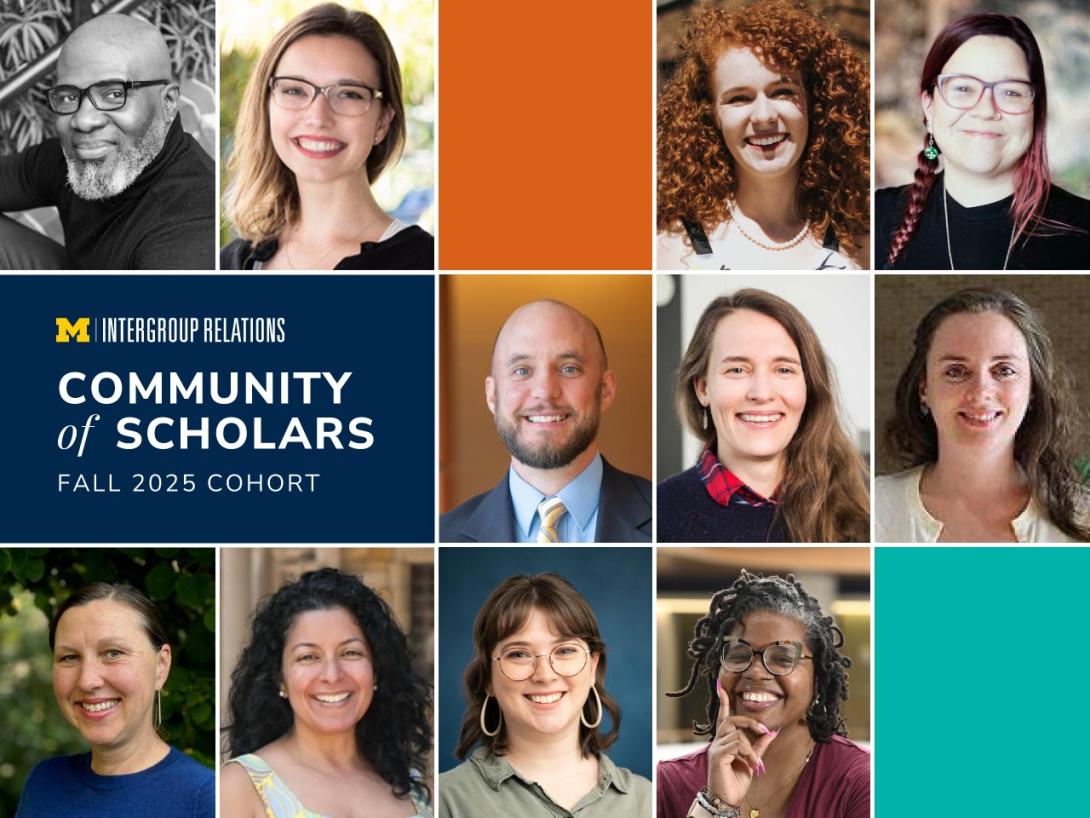
Participants in the fall seminar or winter dialogues are also welcomed into IGR’s Community of Scholars—a growing and meaningful network of practitioners across campus with experience with intergroup dialogue and dialogic pedagogy. The fall cohort includes:
- Caroline Coy - Senior Instructional Consultant, LSA Technology Services
- antonio c. cuyler - Professor, Entrepreneurship & Leadership, School of Music, Theatre & Dance
- Madeline DeMarco - Health Promotion Specialist, Wolverine Wellness
- Kelli Dowd - Sr. Academic Program Manager, Professional Development & Engagement, Rackham Graduate School
- Kevin Hankinson, Ed.D. - Managing Director of Secondary Teacher Education, Marsal Family School of Education, Educator Preparation Program
- Haley Hart - Director, Michigan Engineering Zone, Center for Innovation
- Kate Hughey - Assistant Professor of Family Medicine, University of Michigan Medical School
- Jessica Terlikowski - Project Manager, ADVANCE Program
- Doreen Tinajero - Senior Project Manager, LSA Center for Social Solutions
- Chloe Unrein - Graduate Program Coordinator, LSA Sociology
- Elena Viñales - Manager, Culture, Equity, & Community, School of Kinesiology
- Sarah Zelner - Assistant Director, CRLT
Faculty and staff interested in future Community of Scholars opportunities from IGR can receive updates by letting us know through our short interest form.
Read more